You added your fifth employee last quarter. Now you have twelve. Payroll runs are a spreadsheet ritual that takes a full Friday afternoon. Onboarding is a Notion doc that nobody keeps current. Time-off requests come in through Slack DMs, which means your answer depends on whether you remembered to check a separate calendar. Nothing is broken enough to fix — until it is, all at once, and usually during a fundraise or a hiring sprint.
Teams think the problem is that they don't have the right HR management software yet. The real problem is that they've accumulated workflow debt: informal processes that work fine for three people and collapse at fifteen. The software isn't the bottleneck. The absence of a coherent people-ops architecture is.
This post is not a vendor comparison. It's a framework for thinking about what HR management software actually needs to do at each stage of a product company, what breaks when you pick too early or too late, and how to make it an architectural decision rather than a procurement checkbox.
Table of Contents
- Why Founders Get the Timing Wrong
- The Four Layers of HR Management Software
- What Actually Breaks in Practice
- Comparing Approaches: Monolith vs. Modular HR Stack
- A Practical Implementation Sequence
- Common Failure Modes and How to Avoid Them
- How HR Tooling Connects to Product Velocity
- Choosing the Right System for Your Stage
Why Founders Get the Timing Wrong

Most founders defer the HR management software decision until something breaks — a missed payroll tax filing, a hiring manager asking where the offer letter template lives, a new employee who had no structured first week because the person who ran their own onboarding forgot half the steps. The deferral makes sense intuitively: you're building a product, not running an HR department. People ops feels like overhead.
The mistake teams make is treating HR tooling as a cost center decision instead of a velocity decision. When your people-ops infrastructure is fragmented, the drag is invisible. Engineers spend twenty minutes figuring out how to submit an expense. A new hire's laptop isn't ordered until day three because nobody owns the provisioning checklist. A manager misses a probation review because it's tracked in a personal calendar, not a system. None of these are catastrophic. Collectively, they tax every team member every week.
The Three Inflection Points
There are roughly three moments when the HR management software question becomes urgent:
Around 8–12 employees. Payroll complexity crosses a threshold where manual reconciliation becomes genuinely risky. Benefits administration starts to matter. You probably have your first full-time HR or operations person, or you're about to hire one.
Around 25–40 employees. Performance management, compensation bands, and structured onboarding become real requirements. You're onboarding people you didn't personally recruit, which means the process has to work without you.
Around 75–100 employees. Compliance surface expands significantly. Multi-state or international employment adds legal complexity. The informal cultural transmission that worked at twenty people breaks down without intentional structure.
The practical question is: what do you need to have in place before you hit the next inflection point, not after?
Practical rule: Set up your HR management software one inflection point ahead of where you are now, not in response to the pain you're feeling today.
The Four Layers of HR Management Software
A useful way to think about it is that HR management software isn't one thing. It's four overlapping layers, and most vendors either specialize in one or attempt to cover all four with varying depth.
Layer 1: Record-Keeping and Compliance
This is the HRIS core — employee records, employment history, document storage, tax compliance, and audit trails. It's unglamorous but foundational. If this layer is broken, everything downstream is unreliable. Teams running on a mix of Google Sheets and email folders are technically operating without this layer, which means they're one audit or one departing founder away from serious pain.
Layer 2: Payroll and Benefits Administration
Payroll is often bundled with the HRIS core, but it deserves its own architectural consideration. Payroll touches both your accounting system and your compliance obligations. Getting it wrong has direct legal and financial consequences. Benefits administration adds another integration surface — health insurance carriers, 401(k) providers, FSA administrators — and the quality of those integrations varies enormously between platforms.
Layer 3: Talent and Lifecycle Management
This layer covers recruiting, onboarding, performance management, and offboarding. Many early-stage teams handle recruiting in a separate ATS and never connect it to the HRIS. That's a defensible trade-off early, but it creates reconciliation work: every new hire has to be manually entered into the payroll system, the HRIS, and whatever other tools they need access to. The handoff from recruiting to onboarding is where most new-hire experience failures happen.
Layer 4: Engagement and Development
Pulse surveys, learning management, compensation planning, career laddering. This layer is almost always optional for teams under fifty people, but it's where the highest-ROI HR work happens for scaling teams. The mistake is buying tooling here before the foundational layers are solid — it's the HR equivalent of building a recommendation engine before your data pipeline is reliable.
Practical rule: Audit which layers you're actually operating from before evaluating any vendor. A weak Layer 1 will undermine every investment in Layers 3 and 4.
What Actually Breaks in Practice

The failure modes of inadequate HR management software are mostly invisible until they compound. Here's what teams actually report breaking:
Onboarding Becomes Founder-Dependent
When onboarding lives in a founder's head or in an ungated Notion doc, the quality of a new hire's first thirty days depends entirely on how much bandwidth the person running onboarding has that week. In practice, onboarding during a product sprint or a fundraise is systematically worse than onboarding during a quiet period. New hires notice. It affects ramp time, which affects the ROI on every hiring decision.
Compensation Drift Creates Equity Problems
Without structured compensation bands anchored in a system, early hires often end up with salaries negotiated ad hoc and never revisited. By the time you have twenty-five people, you commonly have significant pay inequity between roles at the same level — not from intent but from drift. This becomes a retention and legal risk at scale. HR management software with compensation management features forces the structure that prevents this.
Offboarding Leaves Security Gaps
This one is underappreciated at early stages. When an employee leaves and offboarding is manual, the probability that some SaaS tool access gets missed is high. The practical risk is a former employee who can still access a customer data system, a code repository, or a financial tool. Most HR management platforms with identity management integrations can trigger automated deprovisioning. Without that, you're dependent on a checklist being followed by a person who may be managing a difficult conversation at the same time.
Performance Management Never Actually Happens
Many early-stage teams have no structured performance review process. This is often defended as a culture choice — "we give continuous feedback." In practice, continuous feedback without structure means feedback that happens inconsistently, skews toward recent events, and never gets documented. When a performance issue leads to a termination, the absence of documentation is a legal exposure. When a high performer leaves because they felt unrecognized, the cause is often traceable to an informal process that didn't reliably surface and reward their contributions.
Comparing Approaches: Monolith vs. Modular HR Stack
The major architectural choice in HR management software is monolith versus modular stack. Here's how those approaches compare across the dimensions that matter to a product-focused team:
| Dimension | Monolith (all-in-one platform) | Modular (best-of-breed stack) |
|---|---|---|
| Setup time | Lower: one integration effort | Higher: N integrations, each needs maintenance |
| Data coherence | Native: one record of truth | Requires sync logic or a middleware layer |
| Feature depth | Variable: usually strong in 1–2 layers | Can be best-in-class per layer |
| Vendor lock-in | High: data portability varies | Lower: swap one layer without replacing everything |
| Cost at 15–50 people | Often higher per-seat | Can be lower if you select lightweight tools |
| Cost at 100+ people | Often lower than equivalent modular | Higher if you've licensed many tools |
| Compliance coverage | Usually strong: vendor owns it | Depends on which tools you've selected |
| Integration with dev tools | Varies: HRIS vendors often lag | Better: Slack, GitHub, SSO integrations tend to be modern |
The mistake teams make with this choice is deciding based on current headcount rather than projected headcount in eighteen months. A modular stack that's fine at twelve people can become a coordination nightmare at forty. A monolith that's overkill at twelve people may be exactly right at forty.
For most product companies in the 10–75 person range, a lightweight monolith (one of the modern HRIS-plus-payroll platforms built for SMBs) covering Layers 1 and 2 well, with a separate ATS for recruiting, is the most defensible architecture. It's not the most elegant. It's the one that fails least catastrophically.
Practical rule: Don't optimize your HR stack for elegance. Optimize it for what breaks least when your HR attention is elsewhere, which for a startup is most of the time.
A Practical Implementation Sequence
If you're moving from ad-hoc people ops to a real HR management software setup, here's the sequence that works in practice:
Audit your current state. List every HR-adjacent process you're running: payroll, benefits, onboarding, time-off tracking, performance reviews, offboarding. For each, note where it lives, who owns it, and what happens when that person is unavailable. This surfaces your actual risk surface.
Prioritize Layer 1 and Layer 2 first. Before anything else, make sure employee records are clean and centralized, and payroll is reliable and compliant. These are non-negotiable. Everything else is downstream of these.
Define your onboarding minimum viable process. Before choosing a platform, write down what a good first thirty days looks like. Which tasks need to happen before day one? Which need to happen in week one? Who owns each step? This becomes your onboarding workflow template, which most HRIS platforms can encode.
Evaluate two or three platforms against your actual process, not their feature lists. Run a real scenario: onboard a test employee, run a payroll cycle, simulate an offboarding. The platforms that look equivalent on a feature matrix often diverge dramatically in actual usability.
Connect your HR system to your identity provider. This is the integration that most teams skip and most regret. When your HRIS can trigger provisioning and deprovisioning through your SSO provider, you close the most common security gap in small-team operations.
Set a calendar trigger to audit the stack at each inflection point. At twenty-five employees, revisit whether your current tooling covers everything you need. At fifty, do it again. HR management software that was right at twelve people often has meaningful gaps at forty.
Document ownership explicitly. For every HR process, there should be a named person responsible and a backup. This sounds obvious. Most teams don't do it, which means processes break during vacations, parental leaves, and departures.
Common Failure Modes and How to Avoid Them
What breaks in practice isn't usually a dramatic failure. It's a slow accumulation of small problems that compound into a larger one.
Buying Too Much Too Early
Some teams, especially those with investors pushing them toward "building like a real company," buy enterprise HR management software at twenty people. They end up with a platform they use at five percent of its capacity, paying for features they don't need, and spending implementation effort they could have spent on product. The compliance complexity of enterprise HR software is real — but it's designed for companies with dedicated HR staff to operate it.
Buying Too Late
The opposite problem is more common and more costly. Teams run on informal processes for too long, accumulate compliance risk they're not aware of, and then face a forced migration when a compliance audit, a fundraise due diligence process, or a legal situation requires clean records. Retroactive data cleanup is expensive and imperfect.
Treating HR Software as HR's Problem
At small companies, HR management software is a cross-functional concern. It touches finance (payroll, equity), engineering (provisioning, security), legal (compliance, documentation), and every manager (reviews, onboarding). When it's siloed in HR or operations, the integrations with other systems tend to be weak, and the org-wide adoption is low. The strongest implementations treat HR tooling as infrastructure, not a department tool.
Neglecting the Manager Experience
Most HR management software is designed with HR administrators in mind. The manager experience — how easy it is for a non-HR person to run a review cycle, approve time off, or track their team — is often an afterthought. When the manager experience is poor, adoption is low, which means the data in the system is incomplete, which undermines the value of the whole investment.
How HR Tooling Connects to Product Velocity
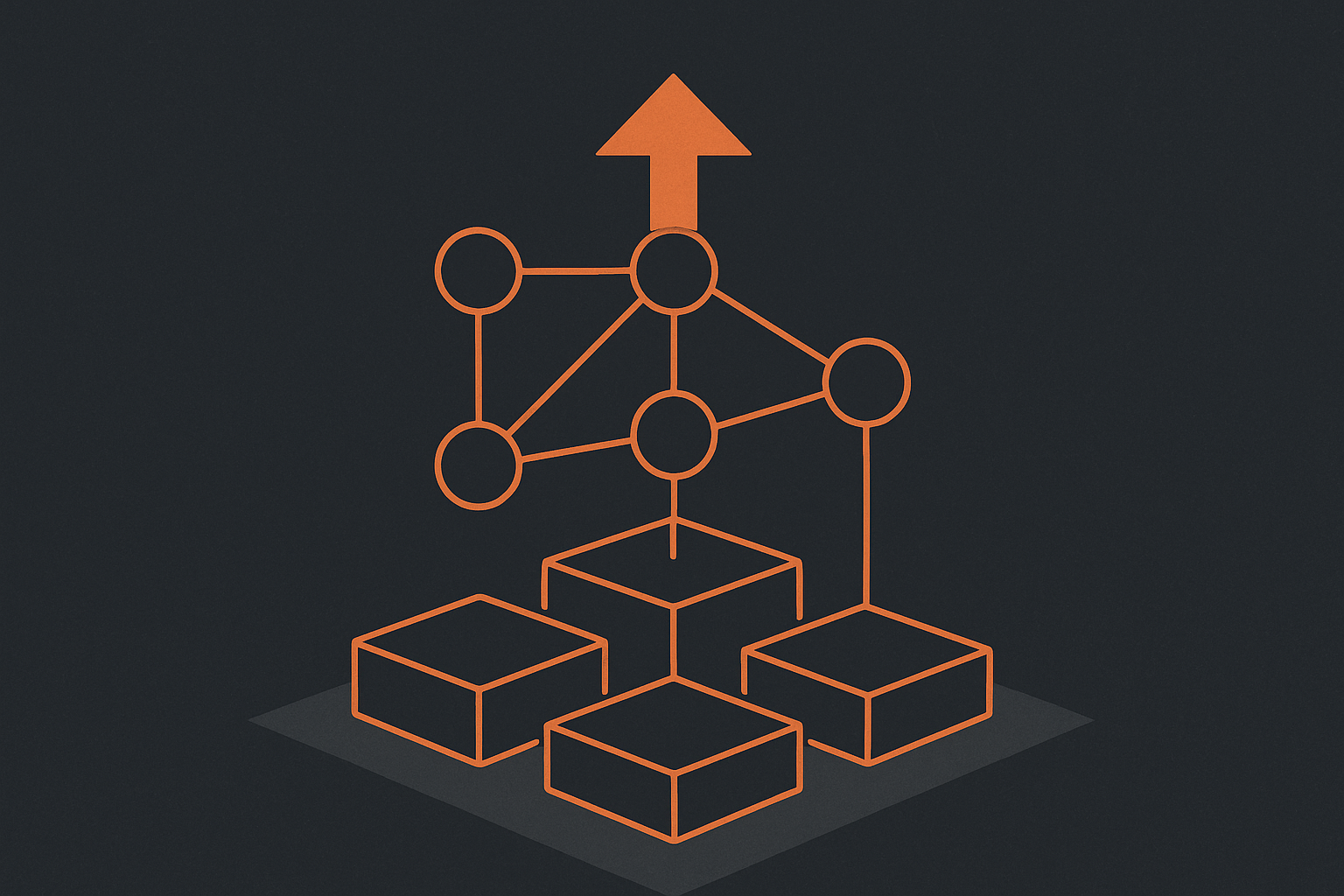
This is the reframe that matters for a product-focused team. HR management software is not primarily a compliance or administrative investment. It's an investment in the throughput of your engineering and product organizations.
Consider what eats engineering and product time in teams without good people-ops infrastructure: ad hoc recruiting involvement, interrupted weeks from poorly run onboarding, manager attention consumed by performance conversations that have no process, recurring payroll-adjacent questions that shouldn't require a founder's time. These are small drains, but they're persistent, and they compound.
When people-ops infrastructure is solid, the engineering team's default assumption is that HR processes will just work. New hires get laptops on day one, have system access, know their first week schedule, and understand what's expected. Performance conversations happen on a predictable cadence rather than in response to a crisis. Compensation questions have a clear owner and a clear process.
That changes the conversation about HR management software from "how much do we have to spend on compliance overhead" to "what's the infrastructure investment that keeps our product team shipping at full capacity."
For product companies specifically, the most important HR management features often aren't the compliance-heavy ones. They're the ones that affect time-to-productivity for new engineers, reduce manager cognitive load, and create clear processes for the routine friction points — PTO, expenses, equipment — that otherwise surface as Slack messages interrupting deep work.
Practical rule: Evaluate HR management software by how much it reduces interrupt-driven work for your technical managers, not just by its compliance feature list.
Choosing the Right System for Your Stage
Rather than recommending specific vendors (which change pricing and features constantly), here's a stage-appropriate framework:
Under 10 people: You don't need a full HRIS. You need payroll software with compliance coverage for your states, a document storage solution for employment records, and a lightweight onboarding checklist tool. Don't over-invest here. The ROI doesn't justify it.
10–30 people: This is the first real investment window for HR management software. You want an integrated HRIS and payroll platform, basic benefits administration, and a structured onboarding workflow. An ATS can remain separate. The key requirements are: payroll compliance across your operating states, a single employee record system, and an onboarding process that doesn't require a founder to run it.
30–75 people: You need performance management capabilities, compensation band tooling, and stronger integrations — especially with your identity provider and your engineering tools. The recruiting-to-HRIS handoff becomes important at this stage: manual data entry across systems is a real time cost and error surface.
75+ people: You're in the territory where dedicated HR leadership, a more robust HRIS, and potentially specialized tools for specific functions (learning management, engagement analytics, compensation planning) make sense. The architecture question shifts from "what's the minimum viable stack" to "how do we build a people-ops platform that scales to 200 people without requiring a full rebuild at 150."
The consistent principle across all stages: buy one step ahead, not two. The companies that buy enterprise HR management software at twenty people are not better prepared than the ones who bought a well-implemented SMB platform. They're just paying more and using less.
Connecting People Ops to Your Product-Building Rhythm
For indie hackers and small product teams, the hardest part of the HR management software decision isn't the vendor choice — it's accepting that people operations is part of the product-building infrastructure, not separate from it.
The teams that ship consistently and scale smoothly aren't the ones that defer people ops until it's unavoidable. They're the ones that build lightweight, reliable HR infrastructure early and expand it deliberately. They treat onboarding as a product they maintain. They treat performance processes as workflows with owners and triggers. They treat HR management software as the data layer that makes all of that reliable.
The practical question when you're choosing HR management software is not "does this check all the boxes on the feature comparison matrix." It's: "does this system reduce the amount of HR-related work that falls into the gap between processes, and does it scale to where we'll be in eighteen months without a full migration."
If it does both of those things reliably, it's probably the right choice — regardless of which vendor logo is in the top corner.
Try sh1pt.com
sh1pt.com is built for founders, indie hackers, and product teams who want to move faster from idea to shipped product — covering shipping strategies, product development workflows, and the operational infrastructure that keeps teams building. Start shipping smarter at sh1pt.com.