
Most founders do not struggle because they lack launch ideas. They struggle because the launch has no operating model. The landing page ships, the announcement goes out, a few friendly people share it, and then the team discovers there is no repeatable path from attention to trust to purchase.
That is why amway products are an interesting reference point for software builders in 2026. Not because a SaaS founder should copy direct selling. Most should not. The useful part is the architecture: a catalog, a distributed trust layer, repeatable demos, reorder behavior, support loops, and clear ownership.
Teams think the problem is distribution hacks. The real problem is workflow design. If you cannot explain how a stranger becomes a buyer, how a buyer becomes an advocate, and how an advocate helps without damaging trust, you do not have a launch system. You have a campaign.
The practical question is not whether amway products are similar to software. They are not. The practical question is what happens when you treat launch as a system of packaging, enablement, trust, measurement, and follow-up instead of a one-time spike.
Table of contents
- Why amway products matter to product builders
- The amway products model as a shipping system
- Map the model to a software launch funnel
- Build a product catalog buyers can actually navigate
- Design the referral and advocate workflow
- Operational workflow for launch execution
- What works when adapting amway products thinking
- Failure modes founders should avoid
- Tooling and team ownership
- Product-fit for sh1pt.com
Why amway products matter to product builders
Not a product category, a distribution pattern
Amway products are sold through a model that combines catalog selection, personal recommendation, demonstration, and repeat purchase behavior. For software teams, the product category is less important than the pattern.
A useful way to think about it is this: the product is not carried only by the company. It is carried by a network of people who can explain it, contextualize it, and introduce it to a buyer with existing trust.
Software teams already want this. They call it community-led growth, referrals, partner programs, affiliates, creator distribution, founder-led sales, product-led growth, or customer advocacy. The labels change. The core operating problem does not.
You need a way for someone outside your team to understand the offer, know who it is for, explain the value without distorting it, and send the right buyer into a conversion path that actually works.
Teams think the problem is launch assets
The mistake teams make is treating launch as an asset checklist. They prepare a landing page, a Product Hunt post, a founder thread, a demo video, maybe a discount, and a few emails. Those things matter, but they are not the system.
If the launch works, nobody knows why. If it fails, everyone debates copy, timing, or channel selection. The deeper issue is usually that the team never designed the operating flow.
Who is the first trusted messenger? What do they say? What promise are they allowed to make? Where do prospects land? What objection gets answered? What happens three days later? Who follows up? What does success look like after the announcement has aged out of the feed?
That changes the conversation. You stop asking whether you have enough launch collateral and start asking whether the buyer journey can be repeated by people who are not you.
The architecture lens
The architecture lens separates the visible launch from the invisible system behind it.
At minimum, a launch architecture has five layers:
- Offer: the promise, package, price, and proof.
- Channel: where qualified buyers already pay attention.
- Messenger: who introduces the offer and why they are trusted.
- Conversion: the path from interest to trial, purchase, or demo.
- Retention: the reason someone keeps using, renewing, or sharing.
Practical rule: If your launch only works when the founder personally explains the product, you have not built distribution. You have built a founder bottleneck.
This is where the amway products reference becomes useful. The lesson is not to mimic the business model. The lesson is to notice that distribution depends on repeatable explanation, trust transfer, and follow-up.
The amway products model as a shipping system
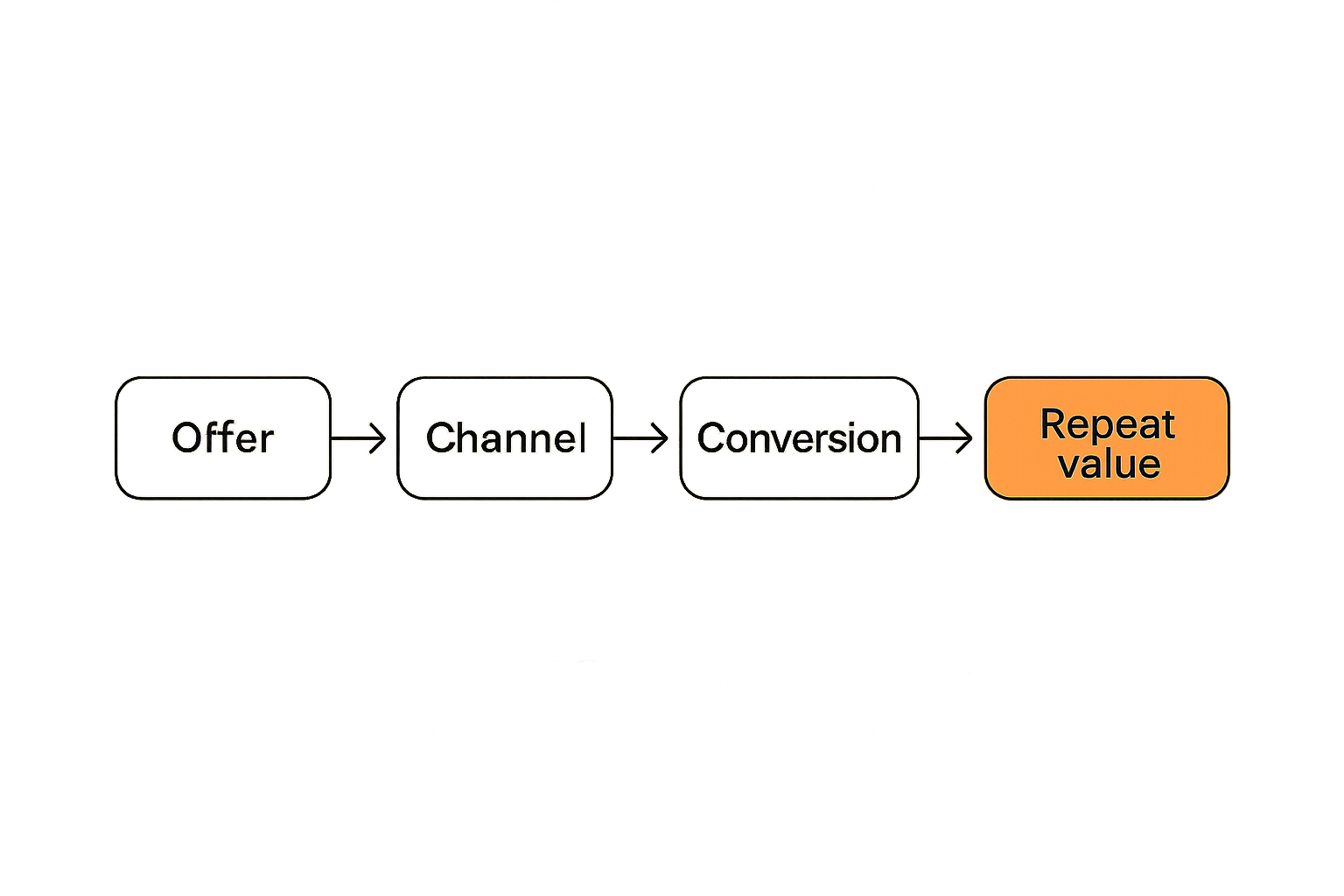
Offer, channel, trust, reorder
The amway products model works as a system because several jobs are connected. There is a product catalog. There are people who introduce the catalog. There is a demonstration or recommendation motion. There is a path to buy. There is repeat consumption. There is support and follow-up.
Software founders often separate these jobs into disconnected tools. Marketing owns the page. Product owns activation. Support owns complaints. Analytics owns dashboards. The founder owns urgent follow-up. Nobody owns the full path from first trust to repeated value.
For indie hackers and small teams, that fragmentation is expensive. You do not have enough people to let the launch sprawl. You need one clear operating model.
Where software teams usually copy the wrong thing
The wrong lesson is to copy aggressive referral incentives, hype-driven advocacy, or complicated commission structures. That is usually where trust breaks.
What breaks in practice is that users feel recruited before they feel helped. The product becomes secondary to the growth scheme. The founder starts optimizing for share behavior before activation, retention, or support can handle it.
This is especially risky in software because the buyer is often not just buying a product. They are buying a workflow dependency. If your tool touches billing, customer data, collaboration, content production, or security, a shallow recommendation is not enough.
What is worth borrowing
The useful parts are operational:
- Make the offer easy to explain without the founder present.
- Give advocates a small number of accurate use cases.
- Create a repeatable demo or activation moment.
- Track introductions through to meaningful outcomes, not just clicks.
- Build support capacity before pushing referrals hard.
- Treat trust as an asset that can be damaged.
Practical rule: Borrow the distribution discipline, not the compensation theater.
For software launches, this means your launch should be designed like a workflow. If you are building the broader system, our practical guide to a go to market strategy operating system is the adjacent foundation: audience, channels, launch workflow, and metrics need to connect before you scale attention.
Map the model to a software launch funnel
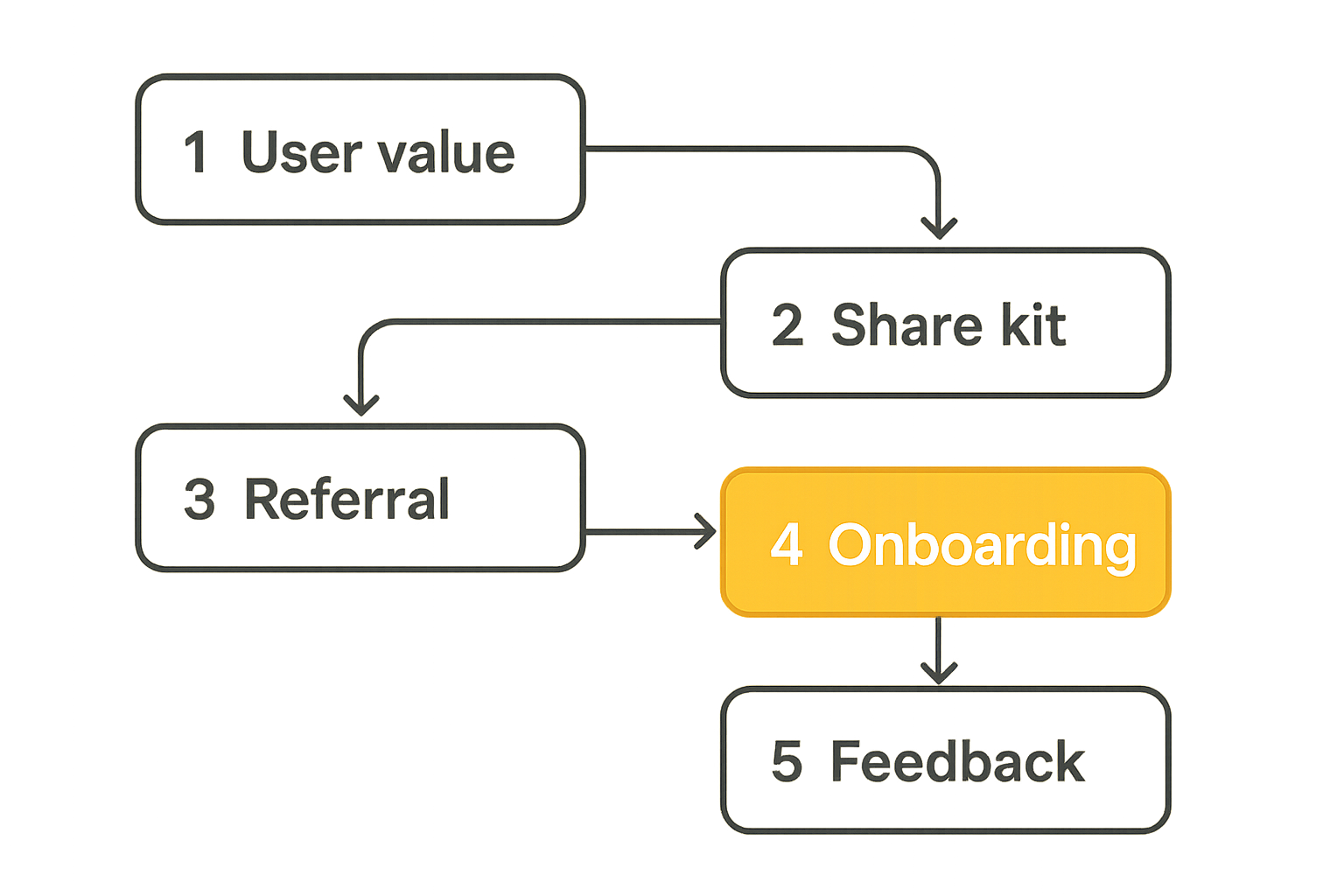
From independent representative to advocate loop
In a direct selling model, the representative is the trust bridge. In software, the equivalent might be an early user, customer champion, integration partner, community operator, consultant, newsletter writer, or internal team lead.
Do not start by asking, how do we get everyone to refer? Start by asking, who can explain this product responsibly because they have experienced the problem and the outcome?
The advocate loop is simple:
- A real user gets value.
- The user can describe the before and after.
- The company gives them a safe way to share.
- The prospect lands in a context-specific path.
- The company closes the loop with onboarding and feedback.
That is different from dropping a referral link into the app and hoping people spam their network.
From catalog to use case packaging
A catalog does not have to mean dozens of products. In software, your catalog is the set of clearly packaged jobs your product can do.
For example, a product management tool might have these packages:
- Plan a beta with 20 design partners.
- Centralize customer feedback from support calls.
- Prioritize a roadmap for a seed-stage SaaS team.
- Run a public launch checklist across product, marketing, and support.
These are more useful than feature groups like boards, comments, integrations, and tags. Buyers do not wake up wanting tags. They want a workflow to stop breaking.
From party plan to live activation
The software equivalent of a product demonstration is not always a webinar. It can be a teardown, onboarding session, live build, office hours, template walkthrough, integration clinic, migration session, or customer story.
The point is to create a moment where the prospect sees themselves using the product in a real context.
For launch teams, this is underrated. A landing page explains. A live activation reduces uncertainty. The prospect can ask the awkward question. The founder can hear where the positioning fails. The team can see which use cases create immediate pull.
Related reading from our network: teams building operational software face similar workflow mapping problems when choosing billing systems, and this guide to invoicing software workflow is a useful adjacent example of evaluating tools by process instead of screens.
Build a product catalog buyers can actually navigate
Package outcomes, not feature inventory
The mistake teams make is presenting the product the way the codebase is organized. Buyers do not care about your modules. They care about the job getting done.
If you want outside advocates to explain the product, you need packages that match buyer language. A founder can improvise this in a call. An advocate cannot. They need a crisp story.
Bad package:
- AI notes
- Team inbox
- Integrations
- Templates
- Dashboard
Better package:
- Turn customer calls into a prioritized roadmap.
- Launch a new feature with a single feedback loop.
- Replace scattered launch docs with one operating board.
- Give sales, product, and support the same customer context.
The second version lets someone say, you should look at this because it solves this specific workflow.
Create starter paths
A software catalog needs starter paths because buyers enter from different levels of urgency.
You might create three paths:
- Quick win: for users who want value in under 15 minutes.
- Team workflow: for buyers who need cross-functional adoption.
- Migration path: for teams replacing an existing tool or spreadsheet.
Each path should have its own promise, onboarding steps, proof, and follow-up. The product may be the same, but the buying context is different.
Practical rule: One product can have multiple entry paths. One landing page trying to serve all of them usually serves none of them well.
This is also where promotional tactics can be useful if they are tied to a workflow, not treated as swag. If you use launch kits, event materials, or physical reminders, the operating question is attribution and timing; we covered that in the guide to promotional products for software launches.
Keep SKU logic out of the UI
Founders often confuse internal packaging with buyer-facing simplicity. You may need detailed plan logic, feature gates, usage tiers, onboarding segments, and partner codes. The buyer does not need to see the entire machine.
The practical approach is to separate three layers:
- Internal SKU logic: plans, limits, discounts, partner tracking, billing rules.
- Buyer packaging: the clear outcome and path they choose.
- Product experience: the smallest set of steps required to reach value.
This separation matters because launch changes fast. You may test pricing, add a partner path, or create a founder cohort. If your UI exposes every internal experiment, the product becomes confusing.
Design the referral and advocate workflow
Ownership beats virality
Many founders say they want a referral program. What they usually want is cheaper distribution. That is not a design requirement. It is a wish.
A referral program needs ownership. Someone has to decide who qualifies as an advocate, what they can say, what assets they receive, how referrals are tracked, what happens when a referred account signs up, and how the relationship is maintained.
For small teams, the owner might be the founder. That is fine. But the workflow should still be explicit.
Minimum advocate workflow:
- Identify users with proven value, not just high NPS.
- Ask for the use case they would honestly recommend.
- Give them a short share kit with approved claims.
- Route referred prospects to a relevant page or onboarding path.
- Notify the advocate when the referral becomes active, if appropriate.
- Review quality monthly: activation, retention, support burden, trust issues.
Reward the behavior you need
If you pay only for signups, you will get signups. If you reward activated teams, retained accounts, qualified introductions, or case-study participation, you get a different behavior.
This is where software differs from many consumer product motions. A signup may have almost no value. A bad-fit signup can cost support time, pollute analytics, and create negative word of mouth.
Reward design should match the business model:
- Self-serve SaaS: reward activated accounts or first paid invoice.
- B2B sales-led: reward qualified introductions or closed opportunities.
- Developer tools: reward usage milestones, integration completion, or public examples.
- Community products: reward helpful onboarding, templates, or educational contributions.
The practical question is what behavior improves the system rather than inflating the top of the funnel.
Guardrails for trust
Advocates need guardrails because trust is easy to spend and hard to rebuild.
Give them:
- Clear positioning: who the product is for and not for.
- Approved claims: what the product can reliably do today.
- Objection handling: honest answers to common concerns.
- Disclosure rules: when incentives, partnerships, or affiliate terms apply.
- Support escalation: how to route confused prospects.
Related reading from our network: the trust and access issues are different, but remote teams face similar coordination tradeoffs in cloud based productivity and collaboration tools, especially when rollout depends on behavior across multiple people rather than a single buyer.
Operational workflow for launch execution
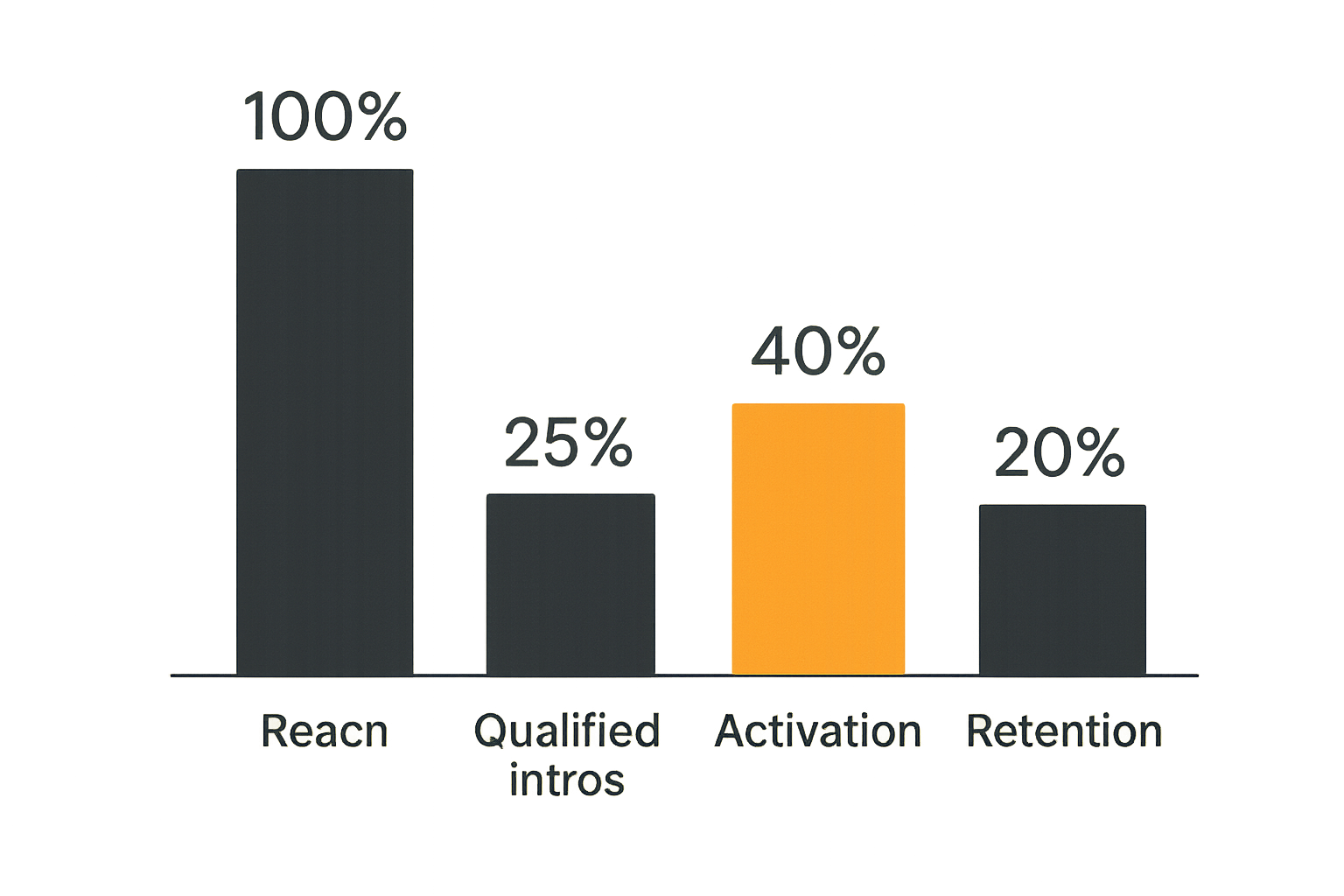
The seven step implementation sequence
The practical sequence is boring, which is why it works.
- Define the launch promise. Write one sentence that names the buyer, the painful workflow, and the outcome.
- Choose two starter paths. Do not build paths for every segment. Pick the two most likely to convert and retain.
- Recruit ten qualified advocates. Use real users, design partners, customers, or domain experts who understand the problem.
- Build the explanation kit. Include a short demo, three use cases, approved claims, objection answers, and a tracking link.
- Create activation moments. Run office hours, live onboarding, teardown sessions, or guided setup windows.
- Instrument the loop. Track source, path, activation, support issues, retention, and qualitative feedback.
- Review and tighten. Remove low-quality channels, clarify confusing claims, and invest in the advocate paths that create durable customers.
This workflow is not glamorous. It is what keeps a launch from becoming a noise event.
The metrics that matter
Do not measure only reach. Reach is cheap to misunderstand.
Useful launch metrics include:
- Qualified introductions: referrals that match the target buyer.
- Landing path conversion: by use case, not just total traffic.
- Activation rate: prospects who reach the first real outcome.
- Time to value: how long before the product proves itself.
- Support burden: tickets or calls per activated account.
- Retention signal: continued use after the launch incentive fades.
- Advocate quality: which messengers produce good-fit users.
A small founder-led launch might track these in a spreadsheet. A bigger team might push them into CRM, product analytics, and support tooling. The sophistication of the tooling matters less than whether the team can make decisions from the data.
What breaks in practice
What breaks in practice is the handoff.
The advocate sends someone interested. The landing page is generic. The signup path asks too much. The onboarding does not match the promised use case. Support has no context. The founder follows up manually for two weeks and then stops.
The buyer concludes the product is immature. The advocate becomes less willing to recommend it. The team blames the channel.
Usually the channel was not the problem. The workflow was.
Practical rule: A referral is not a conversion. It is a trust transfer that your product workflow must either honor or waste.
What works when adapting amway products thinking
What works
The amway products analogy is useful when it pushes you toward repeatable enablement.
What works:
- Clear use case packages.
- Honest advocate enablement.
- Live demonstrations tied to real workflows.
- Follow-up after the first purchase or signup.
- Measurement beyond clicks.
- Support readiness before channel expansion.
This approach is especially strong when the buyer needs context. If your product is obvious in five seconds, you may not need much advocate infrastructure. If your product changes how people work, you probably do.
What fails
What fails is turning the model into a growth costume.
Common failures:
- Launching a referral program before product activation works.
- Asking users to share vague hype instead of specific outcomes.
- Incentivizing volume regardless of fit.
- Hiding weak positioning behind community language.
- Creating compensation logic the team cannot support.
- Ignoring the ethical and disclosure burden of incentives.
Many software founders underestimate how quickly incentives distort behavior. If the reward is easy to game, someone will game it. If the promise is vague, someone will oversell it. If support is weak, referred users will feel misled.
Comparison table for operators
| Decision area | Shallow copy of amway products | Practical software adaptation |
|---|---|---|
| Catalog | List every feature and plan | Package buyer outcomes and starter paths |
| Messenger | Recruit anyone with an audience | Enable trusted users with real experience |
| Demo | Run generic webinars | Show the workflow for a specific use case |
| Incentive | Pay for signups | Reward qualified activation or retained value |
| Tracking | Count clicks and coupon codes | Connect source to activation, support, and retention |
| Support | Handle issues after launch | Prepare escalation paths before referrals scale |
| Trust | Push social proof everywhere | Use accurate claims and clear fit boundaries |
The practical version is less flashy. It is also more durable.
Failure modes founders should avoid
Confusing community with unpaid sales labor
Community is not a distribution tax you impose on users. If people joined to learn, build, or solve a problem, they will notice when the group becomes a disguised sales channel.
The mistake teams make is assuming enthusiasm equals willingness to sell. A better approach is to let advocacy emerge from value. Give users ways to share templates, examples, lessons, and outcomes. Do not immediately turn every helpful member into an acquisition target.
If a community member wants to advocate, make the ask specific and respectful. Ask for a case study. Ask for a workflow teardown. Ask for feedback on positioning. These are often more useful than blasting referral links.
Turning every user into a channel
Not every user should refer. Some are still learning. Some are bad fit. Some love the product for a use case you do not want to scale. Some have influence but no credibility with your target buyer.
Your best advocates usually share three traits:
- They have experienced the pain clearly.
- They reached value with your product.
- They can explain the use case to similar buyers.
That is a smaller group than your user base. Good. Small and qualified beats broad and noisy.
Overbuilding the compensation layer
Founders sometimes jump from zero advocacy to a full partner program with tiers, payouts, dashboards, contracts, and attribution disputes. For most early products, that is premature.
Start with manual tracking and direct relationships. Learn which introductions are valuable. Learn what advocates need. Learn which promises create support problems. Then automate.
This is the same shipping principle that applies to product features: do not automate a workflow you do not understand.
Related reading from our network: the domain is security rather than launches, but this piece on ADT home security as a CI/CD defense model is a useful analogy for sensors, alerts, ownership, response, and validation across a system.
Tooling and team ownership
CRM, analytics, support, and content
The minimum tooling stack for this launch model is not complicated:
- CRM or spreadsheet for advocates and referred accounts.
- Product analytics for activation and retention signals.
- Support system for tagged issues by source or campaign.
- Content repository for approved claims, demos, and share assets.
- Calendar or event tool for live activation sessions.
The important part is integration at the decision level. You do not need every tool wired perfectly on day one. You do need a weekly view that answers: which sources produce good customers, which promises create confusion, and where the onboarding path leaks?
For products where trust and privacy are central, the enablement bar is higher. A customer cannot responsibly recommend a secure communication product from a vague landing page. The same workflow logic shows up in our guide to encrypted messaging software development, where shipping requires product architecture, trust boundaries, and operational readiness to line up.
Launch rituals and decision rights
A launch system needs rituals because otherwise the urgent feed wins.
Useful rituals:
- Pre-launch readiness review: offer, path, tracking, support, advocate assets.
- Daily launch standup during the active window: what changed, what broke, what objections appeared.
- Advocate feedback review: what prospects asked, where claims were unclear, what proof was missing.
- Post-launch decision meeting: what to scale, what to kill, what to fix before the next push.
Decision rights matter. Someone must be able to say no to a channel that brings bad-fit users. Someone must be able to pause a referral incentive that creates support debt. Someone must own the wording advocates are allowed to use.
Without decision rights, the team keeps adding more surface area while the core funnel remains weak.
Adjacent workflow lessons
The broader lesson is that launches are not isolated marketing events. They are operating systems that touch product, support, analytics, content, sales, and customer success.
That is why analogies like amway products can be useful if handled carefully. They force software teams to think beyond the interface. The UI is not the whole system. The buyer has to understand the product, trust the messenger, experience value, and get support when reality is messier than the demo.
A good launch architecture makes those handoffs explicit.
Product-fit for sh1pt.com
When this operating model helps
This model helps when you are building a product that needs explanation, trust, or behavior change.
Examples:
- B2B SaaS with a specific workflow buyer.
- Developer tools that require setup before value is obvious.
- Collaboration products with team adoption risk.
- AI workflow tools where buyers need examples and guardrails.
- Security, privacy, or data products where trust is part of the sale.
- Prosumer tools where creators learn from other creators.
In these cases, the launch is not only about traffic. It is about helping the right people understand why the product matters and how to start.
When it does not
This model is overkill when the product is extremely simple, the buyer intent is already obvious, or the market expects instant self-serve evaluation.
It can also be wrong if incentives would damage trust. Some products should grow through education, integrations, content, or direct sales before they add advocate programs.
The practical question is whether trusted explanation materially improves conversion and retention. If yes, build the workflow. If no, keep the launch simpler.
The closing lesson from amway products is not that software teams should become direct selling organizations. It is that durable distribution depends on packaging, trust, handoffs, and repeat behavior. For founders, that is the difference between a launch spike and a launch system.
Try sh1pt.com
sh1pt.com is for people building and launching software products who want practical shipping strategies, product development processes, and growth tactics. Try sh1pt.com.